
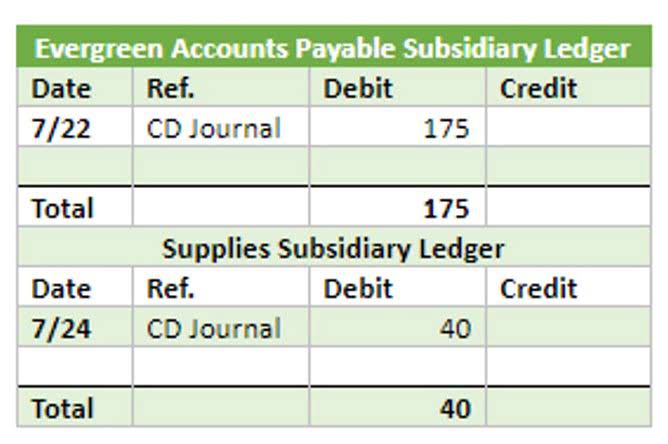
Based on Joe’s business plan, Marilyn sees basics of accounting that there will likely be thousands of transactions each year. She states that accounting software will allow for the electronic recording, storing, and retrieval of those many transactions. Accounting software will permit Joe to generate the financial statements and other reports that he will need for running his business.

Users of Financial Statements
Since 1973, US GAAP has been developed and maintained by the Financial Accounting Standards Board (FASB), a non-government, not-for-profit organization. In 2009, the FASB launched the Accounting Standards Codification (ASC or Codification), which it continues to update. Synder helps https://www.bookstime.com/ you see sales profitability by accurately reflecting inventory in Sales, COGS, and Assets accounts.

Chart of Accounts
Each transaction should be recorded under the correct part of the business it belongs to, such as a specific government agency or corporation. This helps keep financial records clear and makes it easier to separate and review different business activities during an audit. Auditors primarily focus on this principle, which emphasizes consistency in how businesses prepare their financial information. If there are any changes in these accounting policies, they should be clearly noted in the financial statements. If a company follows an accounting principle, it should keep following the same principle until a better one is found. If the consistency principle is not followed, the company will jump around here and there, and financial reporting will be messy.
#6 – Full disclosure principle:
Every thriving business relies on a team of professionals who work behind the scenes to keep the operations running smoothly. The general ledger is also the source document for the financial statements. Other less-used elements of the financial statements are the statement of retained earnings and a large number of accompanying disclosures.
Types of Business and Forms of Ownership

The chart of accounts can be expanded and tailored to reflect the operations of the company. Accounting software plays a crucial role in automating repetitive bookkeeping and accounting tasks, such as data entry and reconciliation. It can also generate financial reports and provide valuable insights into the business’s financial health. Additionally, the use of tools that integrate online sales platforms with accounting software Suspense Account can also simplify the bookkeeping process and enhance a company’s accounting software functionality.
Full disclosure principle
The entry on the books of the company at the time the money is received in advance is a debit to Cash and a credit to Customer Deposits. This account is a non-operating or “other” expense for the cost of borrowed money or other credit. In keeping with double entry, two (or more) accounts need to be involved. Because the first account (Cash) was debited, the second account needs to be credited. Common stock is part of stockholders’ equity, which is on the right side of the accounting equation. As a result, it should have a credit balance, and to increase its balance the account needs to be credited.
- They relate specifically to the types of accounts listed above, and how transactions in these accounts are debited and credited.
- For example, a profitable company with several million dollars of sales is likely to expense immediately a $200 printer instead of depreciating the printer over its useful life.
- In the U.S., the standards to follow are generally accepted accounting principles (GAAP).
- If you ever scale to an LLC or S-Corp, having these in place also makes it easier to show business legitimacy for tax or legal purposes.
Business Studies
He sends invoices to his clients for these fees and his terms require that his clients must pay by January 10. When invoices are prepared and revenues are recorded, the software will also record the amount in the asset account Accounts Receivable. At his first meeting with Marilyn, Joe asks her for an overview of accounting, financial statements, and the need for accounting software.

Also, sales tax laws get complicated fast if you’re selling across states or countries. If you’re unsure whether your services are taxable in a specific state or industry, consult a pro. I set aside 25–30% of every payment I receive, so I’m never surprised by my quarterly estimates. You can use a savings account just for tax funds, or use software like QuickBooks to track automatically. Technically, you should be doing it every day, but we all know life can get in the way. Ideally, you should complete your bookkeeping every month so you can keep a thumb on the pulse of your income, expenses, and overall business performance.
- Inaccurate reporting may later lead to serious problems for a company, meaning it may not be able to pay its debts, or money set aside for investing is not available.
- A nongovernment group of seven members assisted by a large research staff which is responsible for the setting of accounting standards, rules, and principles for financial reporting by U.S. entities.
- The chart of accounts consists of balance sheet accounts (assets, liabilities, stockholders’ equity) and income statement accounts (revenues, expenses, gains, losses).
- The goal is to be open about future losses and cautious about acknowledging future gains.
- Conservatism Principle – accountants should always error on the most conservative side possible in any situation.
- Before accounting principles were introduced, companies were free to record and report financial data as they saw fit.
- Assets, liabilities, and equity are recorded on the balance sheet, showcasing what the business owns, owes, and the residual ownership value.
Because of this, the accountant combines the $10,000 spent on land in 1980 with the $300,000 spent on a similar adjacent parcel of land in 2024. The result is that the company’s balance sheet will report the combined cost of two parcels at $310,000. In contrast, cash basis accounting records income only when invoices are paid and expenses only when bills are settled. The matching principle is the basis of the accrual principle we have seen before. As per the matching principle, it’s said that if a company recognizes and records revenue, it should also record all costs and expenses related to it. So, for example, if a company records its sales or revenues, it should also record the cost of goods sold and also other operating expenses.
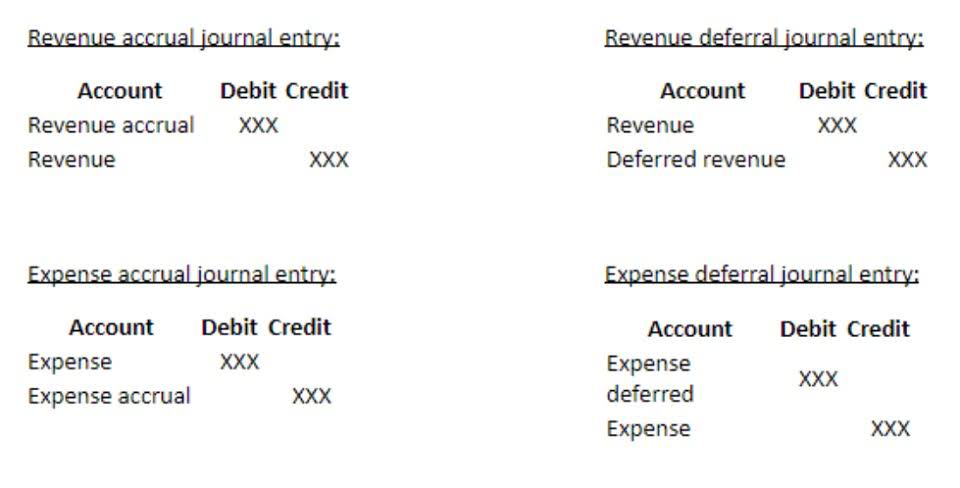
This includes items ready for sale, those in production, and the materials needed to make them. To calculate the burn rate, you’ll select a period and then subtract your on-hand cash at the end of the period from your on-hand cash at the beginning. Then, you’ll take that number and divide it by the number of months in that period. Once you’ve done that, you’ll know your company’s burn rate for that set period. Accounts payable, aka payables, is an account in the general ledger used to track money a company owes to creditors.